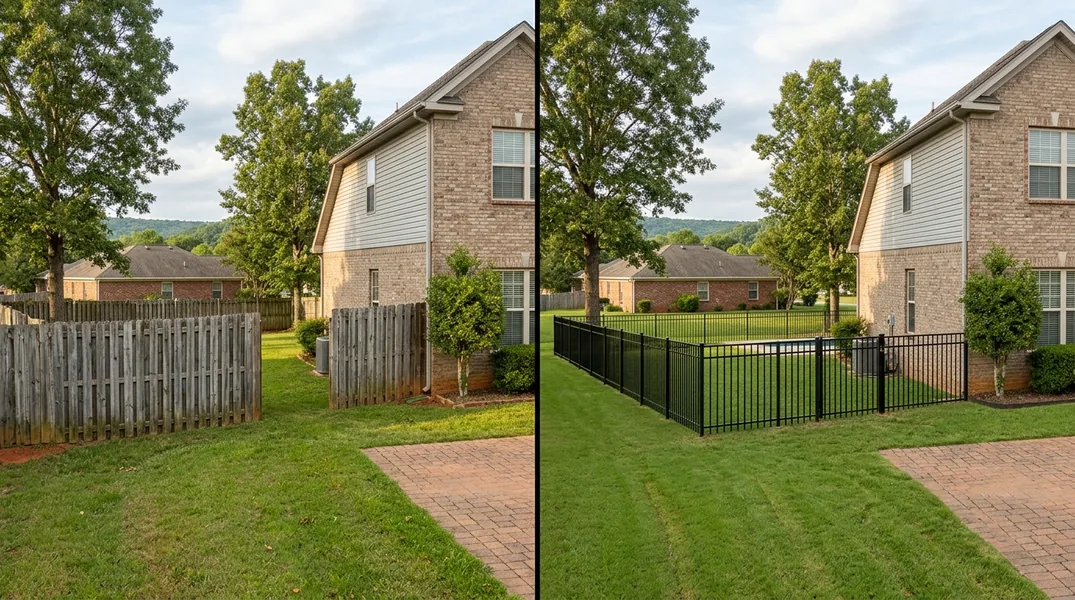
Why Pool Fence Rules Matter for Huntsville Homeowners
If you have a swimming pool in your backyard, the fence around it is not just a landscaping choice. It is a safety barrier, and in Alabama it is also a legal matter. Homeowners in Huntsville often ask us whether a pool fence is actually required by law, what the minimum height is, and whether a gate has to close on its own. The answers depend on a mix of state building codes, local ordinances, and insurance requirements, and getting them right protects your family, your guests, and your home value.
Alabama follows the International Swimming Pool and Spa Code (ISPSC) in many jurisdictions, which sets clear standards for barrier height, gate operation, and latch placement. However, enforcement varies by city and county, and some neighborhoods add their own covenants. Before you buy materials or start digging, it is worth understanding what your specific property needs. A professional Wood & Privacy Fence Installation contractor who works in the area daily can help you sort through the details and avoid costly rework.
Pool Fence Height Requirements in Alabama: What the Code Typically Says
The most common question we hear is about height. Under the ISPSC and most Alabama local adoptions, a residential pool barrier must be at least 48 inches tall, measured from the outside of the fence to the ground. The barrier must not have gaps, footholds, or handholds that a young child could use to climb over. That means horizontal rails, decorative lattice, and wide mesh can all cause a fence to fail inspection even if the overall height looks correct. In practice, this is why so many homeowners choose solid privacy styles or vertical picket designs with tight spacing.
It is important to know that a 48-inch fence is a minimum, not a target. Some insurance carriers and local inspectors prefer 54 inches or more, especially when the pool is close to a property line or a neighbor's yard. If you are installing a new barrier, it is smart to confirm the exact measurement with your city or county building department before ordering panels. Our team at Huntsville Fencing can walk your property, measure the pool area, and recommend a fence style that meets the pricing and safety requirements for your specific lot. You can also request a free estimate to get started.
Self-Closing Pool Gates and Latch Rules You Should Not Skip
A pool fence is only as safe as its gate. Alabama pool fence code requirements generally call for a self-closing pool gate that swings shut and latches on its own from any open position. The latch must be placed high enough to be out of reach of small children, typically at least 54 inches from the ground, or it must be on the pool side of the gate and difficult for a child to manipulate. Gates must also open outward, away from the pool, so that a child pushing on the gate cannot accidentally fall into the water.
Hardware quality matters as much as the fence itself. Cheap hinges and latches wear out, and a gate that fails to close reliably is a serious hazard. When we install a pool barrier, we use self-closing hinges and positive-latching hardware rated for outdoor use, and we test every gate before we leave the job. If you already have a fence and are unsure whether your gate meets current standards, a quick inspection is worth the peace of mind. Call (256) 858-7821 and we can take a look.
Choosing the Right Fence Style for Your Pool Area
Once you know the code requirements, the next decision is style. Wood privacy fencing is a popular choice in Madison and Huntsville because it blocks sightlines, reduces noise, and creates a comfortable backyard retreat. A solid wood barrier can satisfy the climb-resistance requirement as long as it is built to the correct height and has no footholds. Vinyl & PVC Fence Installation is another strong option: it resists moisture, does not need painting, and holds up well in Alabama humidity. Both materials can be built with self-closing gates and child-safe latches.
If you prefer a more open look or need to match existing landscaping, Aluminum & Ornamental Iron Fencing can work for pool areas when the pickets are spaced closely enough to prevent a child from slipping through. Chain Link Fence Installation is the most budget-friendly route, but standard chain link often needs a privacy slat or mesh add-on to meet climb-resistance and visual barrier expectations. A local installer can help you compare options side by side and choose one that fits your budget and your yard.
Pool Fence Installation Near Me: Questions to Ask Before You Hire
Before you sign a contract, ask your installer three things: whether they will pull the correct permits, whether they will build to the current ISPSC and local amendments, and whether they will test the gate and latch after installation. A reputable contractor should be able to explain the pool fence height requirements in plain language and show you examples of similar work in the area. It is also fair to ask about materials, warranty terms, and how long the project will take. In Decatur and Athens, we see the same questions come up, and the answers are usually the same: permits, measurements, and hardware quality are what separate a safe pool fence from a liability.
Finally, think about long-term maintenance. Wood needs periodic sealing, vinyl needs occasional cleaning, and metal fences should be checked for rust or loose fasteners. A pool barrier is a safety system, so it deserves a yearly once-over, especially before summer. If you want a professional opinion on your current setup or a quote for a new one, Huntsville Fencing is happy to help. Reach out for a free estimate or call (256) 858-7821 to schedule a walkthrough.
Looking for a professional fence contractor in Huntsville? Huntsville Fencing responds fast for all your fence needs.
Get a Free Quote