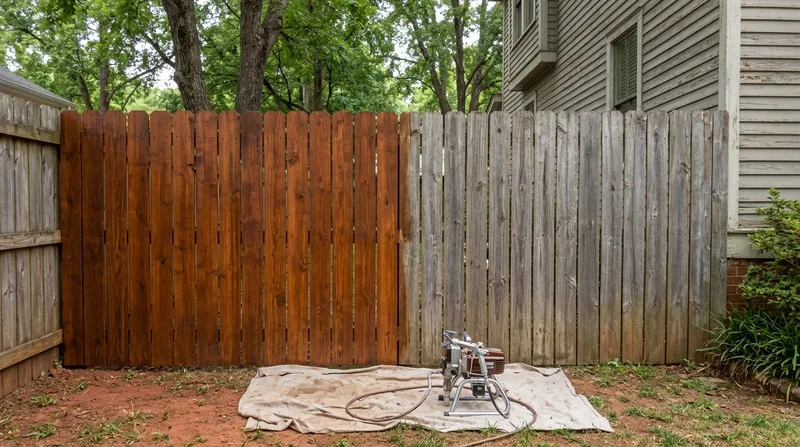




Huntsville fences take a beating that most homeowners do not see until the boards go gray and the rails start to cup. Between the long humid summers, the strong UV that hammers west-facing pickets, and the heavy spring rains that soak the red clay at the post line, a six-foot treated-pine or cedar privacy fence in Five Points or Jones Valley will lose its factory finish faster than the same fence would in a drier climate. Fence staining in Huntsville is the cheapest way to buy back years of service from wood that is still structurally sound. We clean, brighten and seal cedar and pressure-treated pine, and we tell you straight when a fence is worth saving and when the money is better spent on replacement. If the boards are soft and the posts are punky, see our fence repair service before you spend a dollar on stain.
Why Staining Matters on Huntsville Wood Fences
The Tennessee Valley sun is not the only enemy. The bigger problem in Huntsville is the wet-dry cycle: spring rains soak the wood, summer heat pulls the moisture back out, and the grain opens up a little more each season. That is what turns a cedar fence on Monte Sano gray and fuzzy in four or five years, and it is why a stained fence outlasts an unstained one by a wide margin. Sealing also slows the warping and cupping that make pickets look tired long before the wood is actually failing.
- UV graying breaks down the lignin in cedar and pine, and the board turns silver and rough to the touch.
- Moisture cycling swells and shrinks boards, which opens checks and splits along the grain.
- Mold and mildew take hold on shaded north-facing panels in Hampton Cove and Harvest where air movement is poor.
- Ground-line rot starts at the post, not the picket, and no stain will fix a post that is already soft.
Staining does not stop rot at the ground line, so we check posts and rails first and tell you what we find before we open a bucket.
Key info: A cedar fence in Madison or Meridianville that gets cleaned and sealed on a three-year cycle will typically last well past fifteen years. The same fence left bare often needs full replacement inside ten.
For the official word on wood preservation and finish performance, the USDA Forest Products Laboratory publishes plain-language guidance that matches what we see in the field.
How We Clean, Brighten and Seal a Fence in Huntsville
Prep is the whole job. A stain applied over dirt, mildew or a failed previous coat will peel within a season, which is why we spend most of the visit on cleaning and brightening before any sealer goes down. We work around landscaping, gates and outbuildings, and we protect the ground under the fence line with drop cloths before we start spraying.
- We walk the fence line and check posts, rails and pickets for rot, loose fasteners and storm damage.
- We apply a wood-safe cleaner and let it dwell to kill mildew and lift the gray layer.
- We rinse at low pressure so we do not fuzz the grain or drive water into the post holes.
- We apply an oxalic brightener to even out the color on cedar and on weathered pine.
- We let the wood dry to the moisture content the sealer manufacturer specifies, which in Huntsville humidity can take a day or two longer than homeowners expect.
- We spray or back-brush the stain, working with the grain and keeping a wet edge on each panel.
- We do a final walk-through with you to confirm coverage and flag anything that needs a repair.
If the fence needs structural work before it can be stained, we fold that into the same visit rather than leaving you to schedule a second crew.
Local example: A homeowner in Owens Cross Roads had a ten-year-old cedar privacy fence with gray, mildew-streaked panels on the shaded side. We cleaned and brightened it, replaced two soft posts at the ground line, and sealed it in a transparent cedar tone. The fence looked five years younger and should hold for another three seasons before it needs a recoat.
If you are weighing stain against a full rebuild, our fence replacement and removal page lays out the trade-off in plain terms.
Stain and Sealer Options We Use
Not every fence wants the same product. A transparent stain shows the grain and suits a good cedar fence, while a semi-transparent or solid color hides weathering and works better on older pine. We match the product to the wood and to how much color change you actually want.
| Approach | Description | Best for |
|---|---|---|
| Transparent stain | Shows the natural grain and color of the wood with UV protection | New or lightly weathered cedar fences |
| Semi-transparent stain | Adds tone while still letting some grain show through | Treated pine that has grayed unevenly |
| Solid color stain | Opaque finish that hides weathering and mismatched boards | Older fences and HOA color requirements |
| Clear water-repellent sealer | No color change, focuses on moisture and UV resistance | Fences you want to keep looking natural |
| Clean and brighten only | Restores color without a sealing coat | Fences being prepped for sale or inspection |
Fence Staining Cost in Huntsville: What to Expect
Most residential staining jobs in Huntsville start around $950 and go up from there. The number that matters is linear feet, condition and how much prep the wood needs. A clean cedar fence that was sealed three years ago is a fast job; a gray, mildew-covered pine fence with two soft posts is not, and we price it honestly rather than quoting low and adding charges later.
Factors that move the price include the length of the fence line, the height and style (a board-on-board privacy fence has twice the surface area of a side-by-side picket fence), how much cleaning and brightening the wood needs, whether there are repairs to fold in, and access around landscaping, gates and outbuildings. Getting two or three estimates is smart, and any reputable contractor will walk the fence with you and explain what is included. Our full pricing overview breaks down how we build a quote.
Choosing a Fence Staining Contractor Near Me in Huntsville
Staining looks simple until a crew sprays over dirt and the finish peels in six months. Ask who will actually be on site, whether they clean and brighten before sealing, and what product they plan to use and why. A good contractor will tell you when staining is a waste of money and a repair or replacement is the better call.
On the paperwork side, ask for a certificate of insurance showing general liability and workers' compensation cover, and confirm it before work starts. Confirm permits and any local licensing with the City of Huntsville or Madison County building department, and check HOA architectural standards before you pick a stain color. We are fully insured, and we will help you document storm damage for an insurance claim, though approval is up to your carrier.
Ready to see what your fence needs? Contact us for a free estimate and we will walk the line with you.
Fence Staining & Restoration in Huntsville: Pricing Guide
| Service | Price | Details |
|---|---|---|
| Clean, brighten and seal (up to 150 linear feet) | Starting at $950 | Includes wash, oxalic brightener and one coat of sealer on an accessible fence line |
| Clean, brighten and seal (150 to 300 linear feet) | Starting at $1,650 | Price scales with linear feet and surface area on board-on-board privacy panels |
| Repairs folded into a staining visit | From $150 per post | Covers replacing a soft post at the ground line before the sealer goes down |
| Large or heavily weathered fence | On estimate | Heavy mildew, failed previous coats or tight access need an on-site look first |
| Travel | Included | In Huntsville and surrounding areas, no separate call-out or mileage fee |
| Estimate | Free | Response within 24h at (256) 858-7821, no obligation to book |
Indicative pricing, the exact cost depends on square footage, finish, and site access. Free personalized estimate within 24h at (256) 858-7821.


